
The Who’s “I Can See for Miles”: Why the Chords Keep Reaching
The chords climb while the bass stays on E. Explore how borrowed chords and a pedal point stretch the chorus of The Who’s I Can See for Miles.


The Who keep stretching the word “miles”, and the music stretches with it. The chords climb, each repetition carrying the phrase further, while underneath them the bass stays on E.
That E is what makes the climb so interesting. The harmony moves further away from the home chord, but the home note is still there, sounding against every change. By the time the E chord returns, it has been a long wait. I love how satisfying that arrival is.
Listen to The Who’s “I Can See for Miles”
Artist-channel recording from The Who Sell Out. Follow the extended repetitions of the title, then listen underneath the voice.
The chords reach outside E major
The song starts out in E major. The rising passage takes the upper chords through G major, A major, C major and D major before returning home. Listen to their roots: G, A, C, D, E.
G major is already an interesting choice. E major has G♯, yet here comes a whole G major chord, complete with G natural and D natural. Further up the climb, C major introduces another note outside E major: C natural.
G, C and D major all belong to E minor. The progression moves between chords from E major and its parallel minor, borrowing those extra colors while keeping E as home.
This concept of borrowing chords from a parallel key is also called modal interchange. E major and E minor share the same home note, but their different notes give you different chords to choose from.
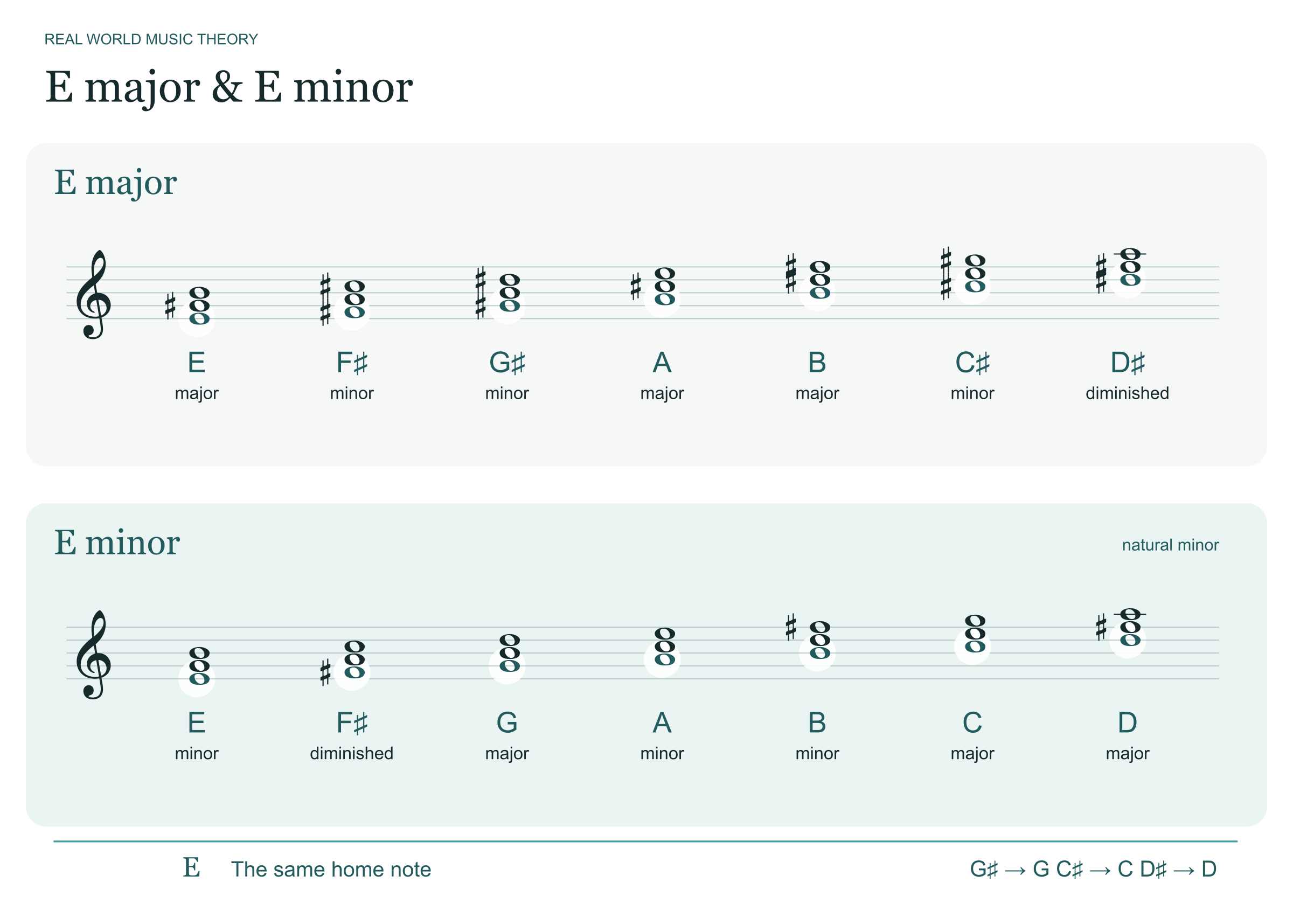
For that rising G–A–C–D–E, The Who take G, C and D from E minor, and A and the final E from E major.
Notice that the borrowed chords are major. E minor supplies G major, C major and D major, so borrowing from minor gives this passage a succession of major chords on roots outside the major scale. Between them, A major brings in C♯ from E major.
You can borrow chords from the parallel minor and still come home to E major.
Now listen to the E underneath
So far, those chord names describe what is happening above the bass. If the bass followed their roots, it would climb through G, A, C and D too. Instead, it keeps returning to E.
To include that bass note in the chord names, G becomes G/E: a G major chord over E. The slash separates the upper chord from the bass note. The full climb is G/E, A/E, C/E, D/E, then E. At the piano, keep repeating E with your left hand while you change chords with your right.
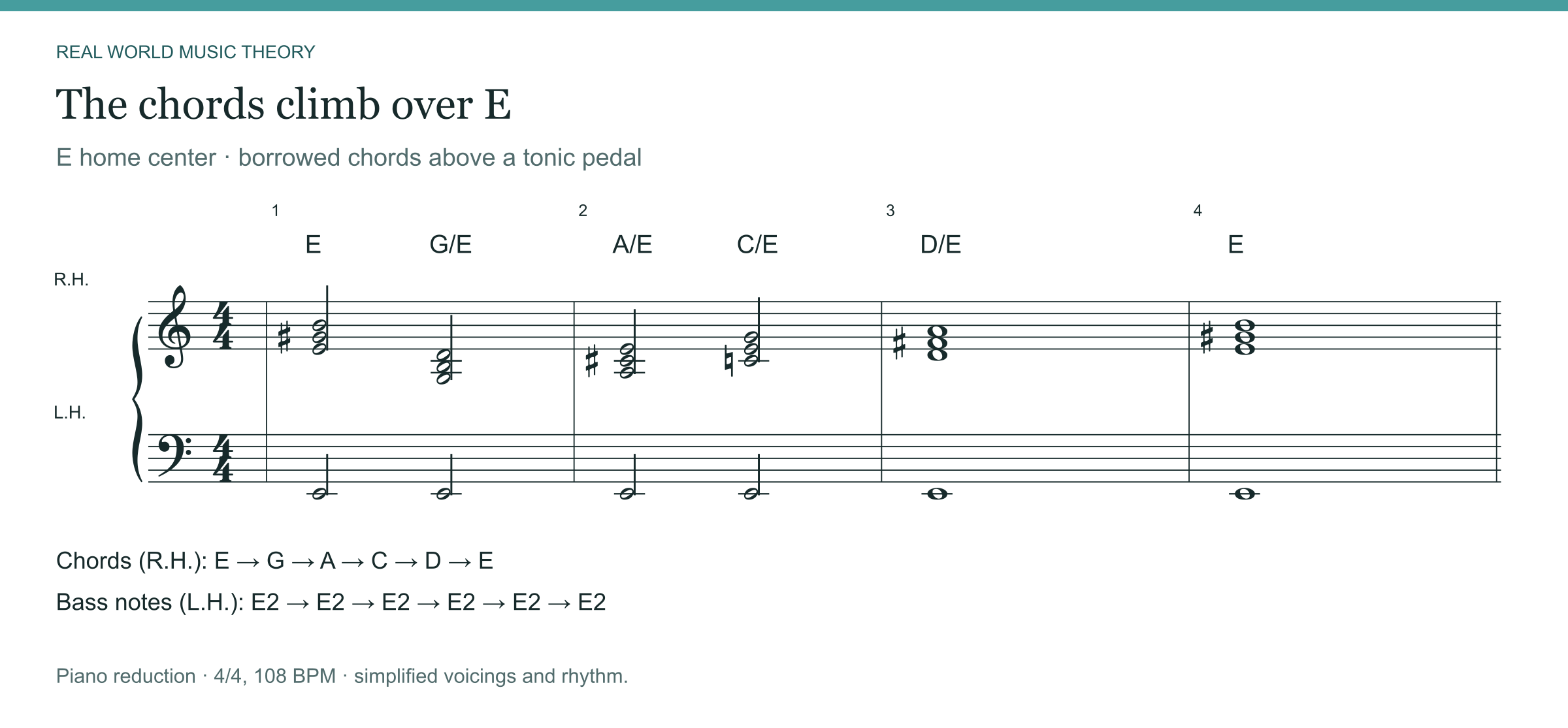
A note held or repeated while the harmony changes around it is called a pedal point. Here it is the home note, or tonic, so this is a tonic pedal.
Listen to how that E fits into each chord. With G major, it gives you E–G–B–D, the notes of an E minor seventh chord. With A major, E is already part of the chord, its fifth. In C major, it is the third. Then comes D major: D–F♯–A contains no E at all. The bass keeps sounding E against it, holding on to the home note as the upper chord pulls away.
That D/E is the sound I keep wanting to play again. Stay on it a little longer, then return to E major. In the piano voicing above, D–F♯–A rises to E–G♯–B, each upper voice moving a whole step. The bass stays exactly where it is, and suddenly the parts agree on E.
What changes if the bass moves too?
Give each upper chord its own root in the bass and the passage changes character. G gets a G underneath it, A gets an A, and the bass climbs with the harmony.
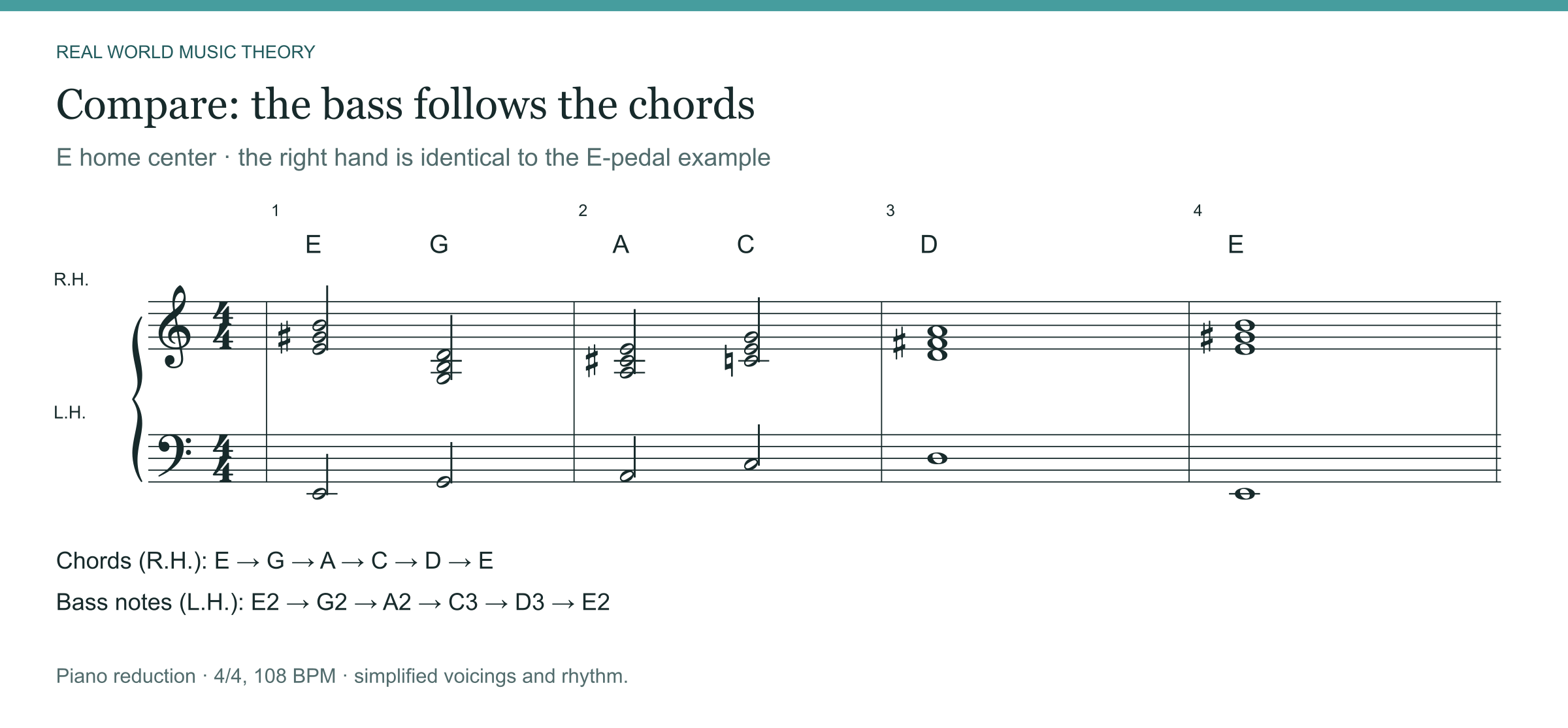
Go back to the E pedal after hearing that moving bass. With the moving roots, the D chord has D underneath it and sounds settled as a D major chord. Over the pedal, that same D chord has to coexist with E in the bass. That is the unresolved relationship you hear disappear when the E chord returns.
The borrowed chords supply the climb; the pedal keeps that climb tied to E. On the record, the rhythm and the band's energy keep it driving while the bass holds its note.
There is a related effect in my analysis of “Gimme Some Lovin’”: changing harmony over a fixed bass, followed by the lift when the bass gets to move.
Later, the whole idea moves up to A
Later in “I Can See for Miles”, the music moves up a fourth, from E to A. A becomes the new home note, and the bass holds A while the upper chords make the same kind of climb.
Every chord in the earlier passage moves up by that same interval: G becomes C, A becomes D, C becomes F, D becomes G, and the final E becomes A. So the upper chords now climb C–D–F–G–A.
The borrowing moves with them. C, F and G belong to A minor, while D and the final A belong to A major. The pedal is A throughout, giving C/A, D/A, F/A and G/A before the return to A.
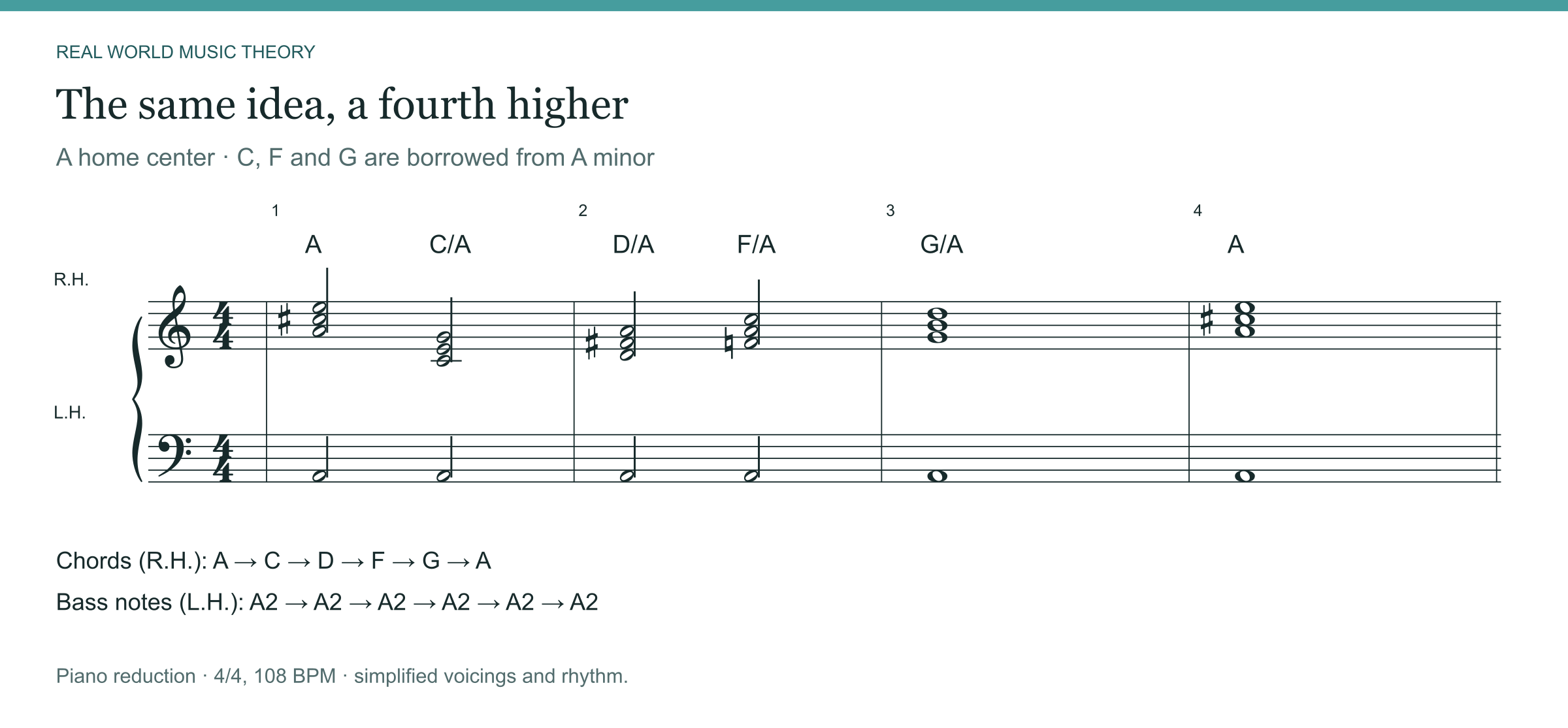
G/A now does the job that D/E did earlier: the upper chord sits a whole step below the home chord, over a bass note that is already home. This time, the song stays there longer, extending the repeated title before finally returning to A.
The lyrics and the harmony reinforce each other so well here. The voice keeps stretching the distance, and the chords keep delaying the resolution. That return to A is worth waiting for.
How long can you hold back the resolution?
You can hear how much the length of that last chord matters without changing the progression. Return to the E-pedal score above and hold its D/E chord for an extra bar before playing E major. Then play it again with D/E lasting only two beats before the return. Keep E in the bass in both versions and compare how strongly you want the home chord to arrive.
Try that in your own music. Take a short progression from a verse, intro or ending and keep your home note in the bass. Compare it with the bass following the chords. Then try borrowing a chord from the parallel minor. Stay on it a little longer and listen to what happens when you return to your home chord.
The question is where the phrase wants to arrive. Does holding that last chord make the return more satisfying, or does the music need to move on sooner? The later A passage in “I Can See for Miles” is a wonderful reason to try the longer wait.
For another way to borrow from minor, try the free minor-iv lesson from my workbook, Make Your Chords More Interesting. In C major, you’ll compare F major with F minor, then try that borrowed chord in a phrase of your own.
The piano recordings and scores use simplified triads and a four-bar comparison rhythm at 108 BPM, rather than the record’s guitar voicings and timing.
Notation uses Bravura by Steinberg under the SIL Open Font License.
Keep both chord collections beside your instrument. Join my free newsletter to get the printable reference, or sign in if you already have an account.
